
Boss Morris | Recipient of the 2025 grant
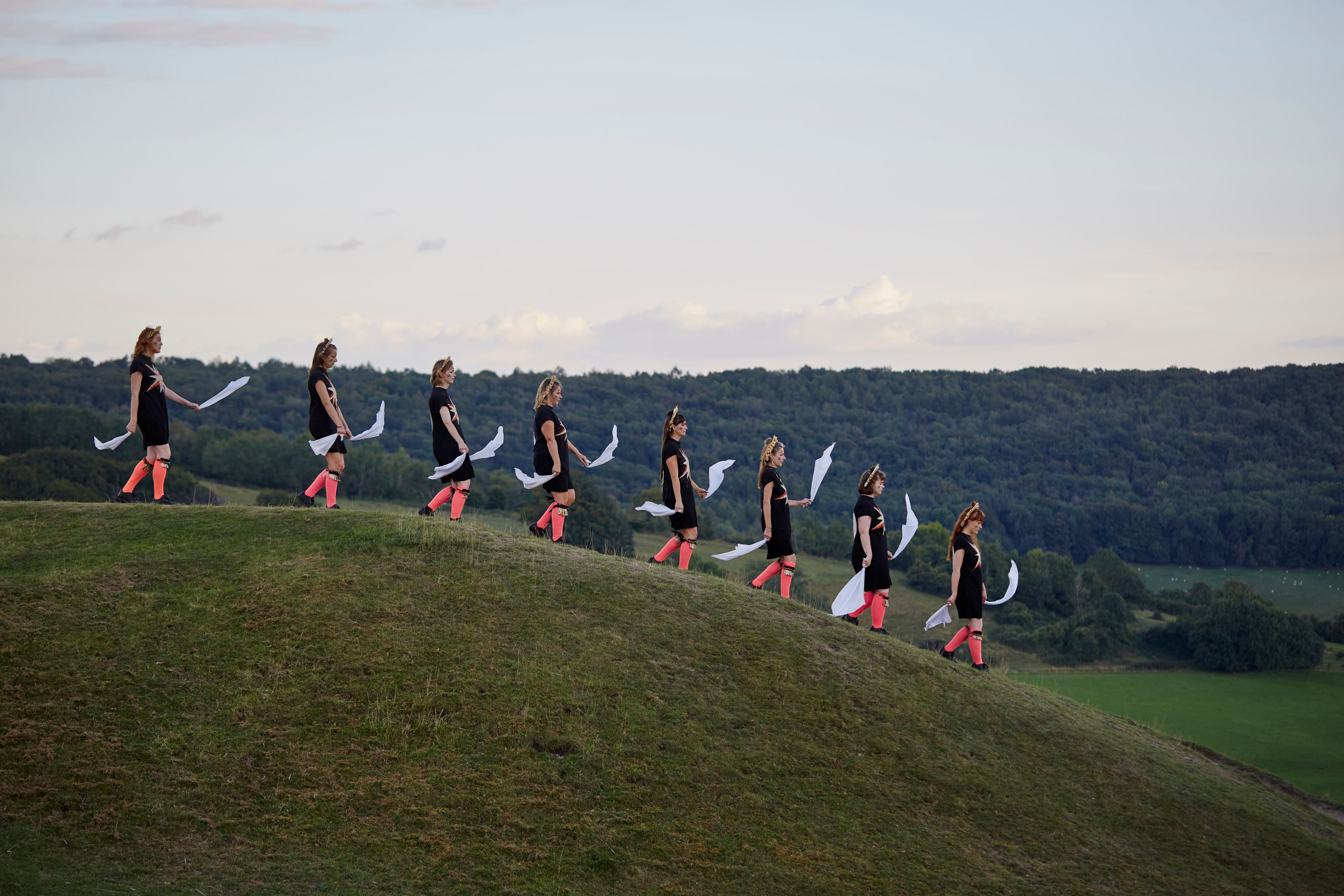
Founded in 2015, Boss Morris has quickly become a prominent feature in the British Folk landscape. Showcasing a fusion of traditional and contemporary styles, Boss Morris has played a key role in reviving interest in this historic art form. With the support of the Ffern Folk Foundation, Boss Morris has expanded their outstanding work across multiple initiatives. These range from the creation of new costumes and performances, to the curation of an exciting new educational programme called Boss Folk Arts.
In Discussion
How did you begin, and how has Boss Morris evolved since you started ten years ago?
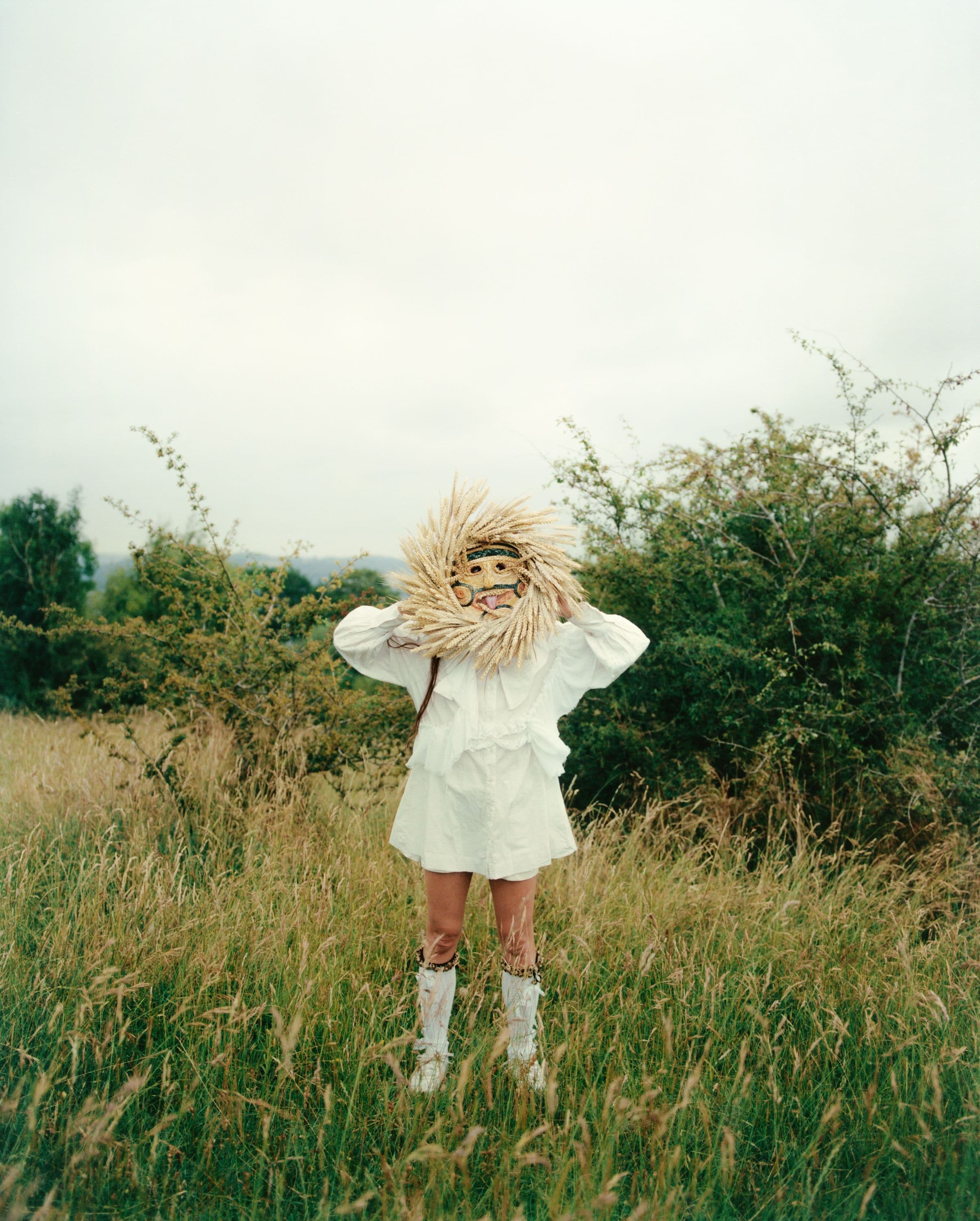
Boss started when Alex (who’d previously danced with The Belles of London City), moved back to Stroud and set up a new side with her sister Kate. They asked friends if anyone fancied giving it a go and it grew from there.
Local Morris and folk expert Steve Rowley helped get us started and we learned by meeting every week and working things out as we went along. Most of us were completely new to Morris at the beginning but now we are all quite seasoned jinglers.
Over the years, dancers and musicians have come and gone, but every person has added something special to the pot and helped shape what Boss is today. The shape of the group keeps changing and the scale of what we do has grown. With that has come more confidence (individually and as a side) and a sense that we can take on any new challenges as they come up.
People can have quite a set idea of what Morris dancing is, yet throughout the UK there is a large variety of style and technique. As befitting a Stroud-based side, can you explain what is so unique about Cotswold Morris dancing?
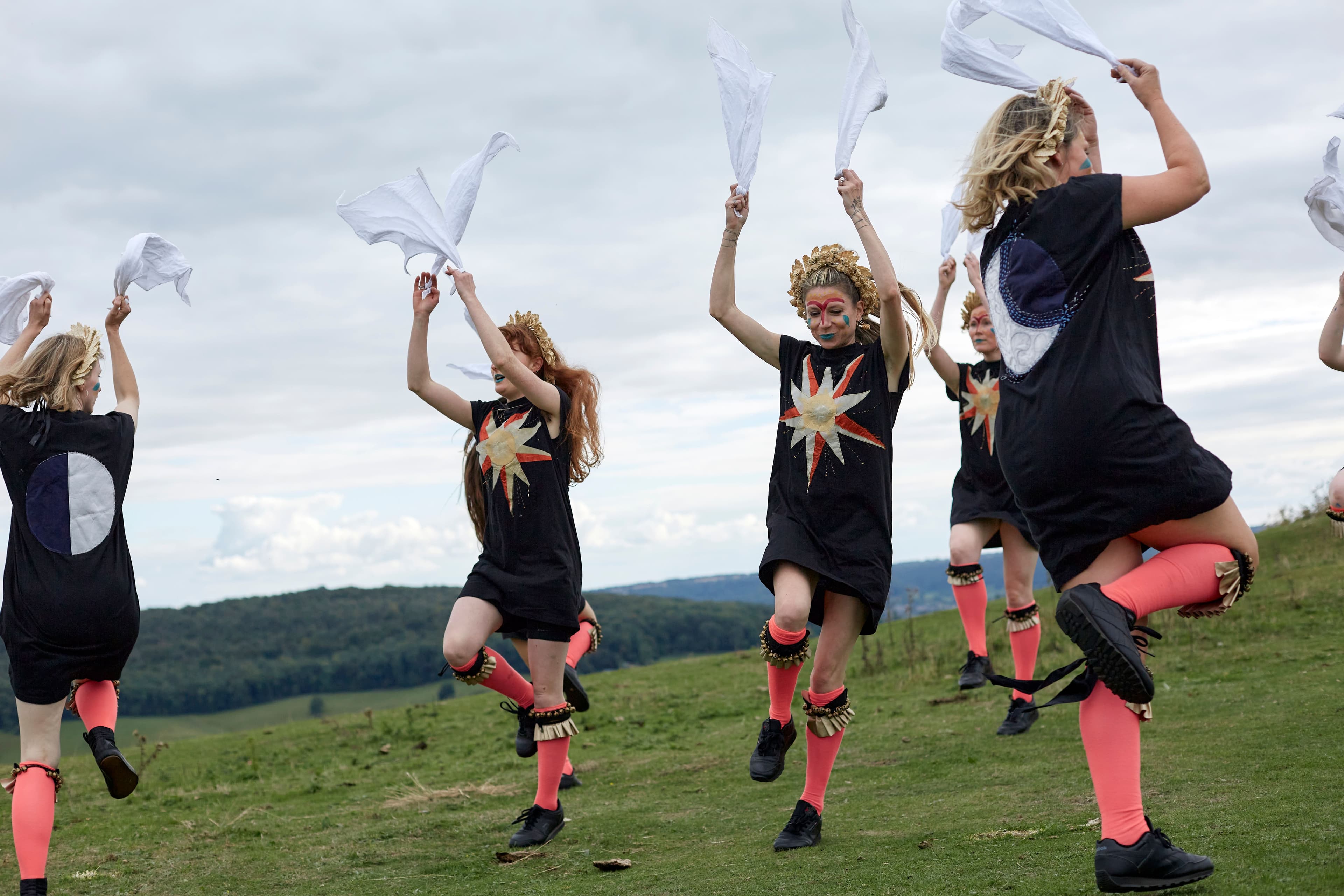
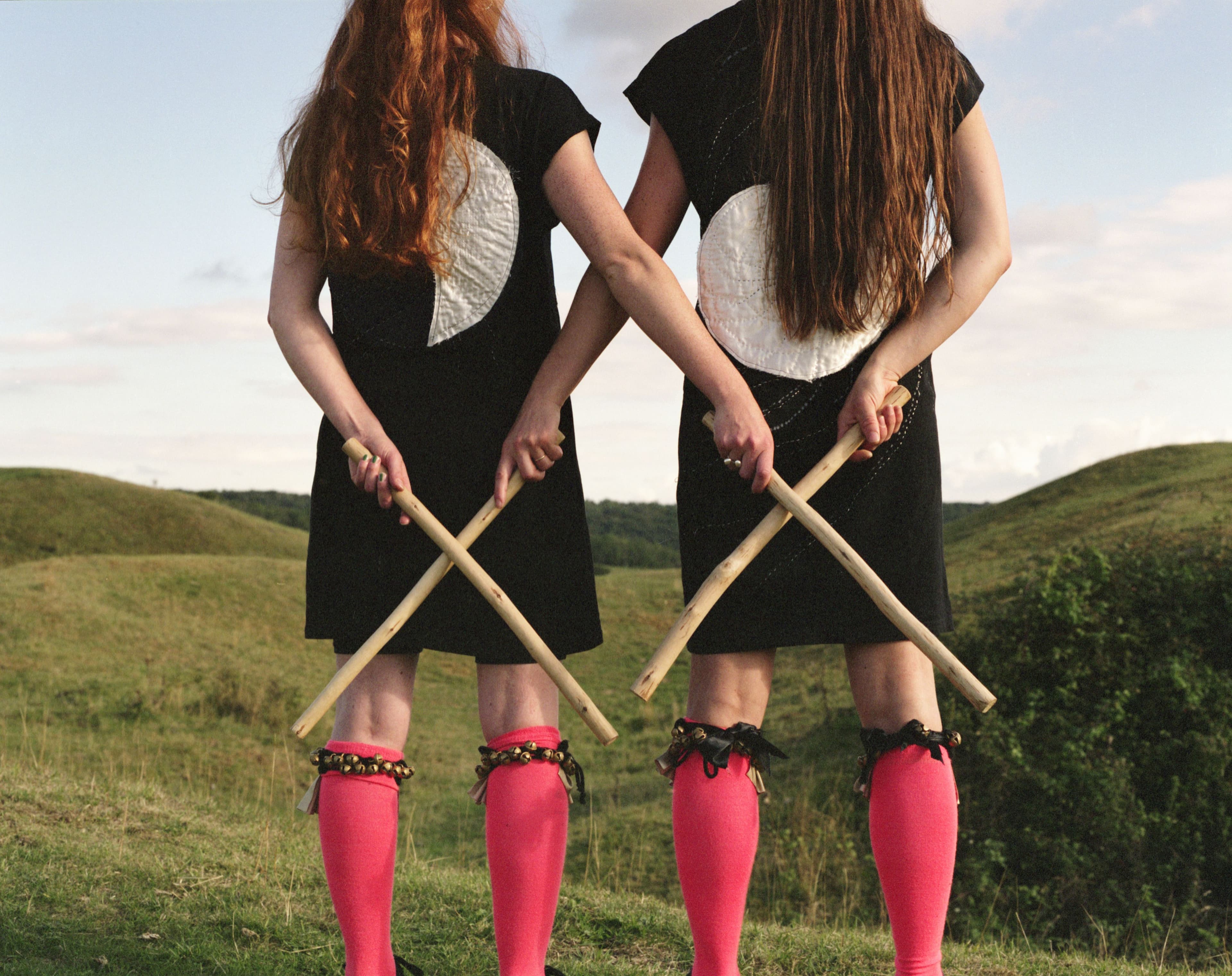
Cotswold Morris is probably what most people picture when they think of Morris dancing. Bells, hankies, sticks and flowery hats. It’s a recognisable style but that doesn’t mean it’s simple. Each Cotswold village dances things slightly differently, with its own steps and quirks, so there’s lots of local variation and room for personality within that. It’s physical and athletic, which works well for us as a group. It can be joyful and flowery but it also has real grit and drive when you get into it.
For your performances you often collaborate with amazing musicians such as Sam Sweeney, Miranda Rutter and Rob Harbron. What are the challenges of playing for a Morris side?
It’s a very specific skill. The music isn’t separate from the dancing, it’s a completely integral part of it. The tunes have to hold the dancers, give them lift and respond in the moment. Small changes in tempo or phrasing can completely change how a dance feels, so it’s about constant listening and adjustment. One of the challenges is that the regular beat has to bend to fit both the dance steps and the individual ways each dancer moves. Finding a balance between letting the music flow as a strong piece of music in its own right, while also holding the dance together as a group of individual bodies, can be tricky but it’s also what makes it so enjoyable and rewarding.
As Miranda [Rutter] puts it, the joy of playing for Boss is that we’re all coming from the same place. There’s a deep respect for the traditional repertoire and a genuine curiosity about getting to know it properly, alongside a playful, collaborative way of letting it evolve and stay alive. We see tradition as something alive rather than fixed. It’s not about copying things exactly but about carrying them forward in a way that still makes sense now.
"We see tradition as something alive rather than fixed. It’s not about copying things exactly but about carrying them forward in a way that still makes sense now."
It's been so wonderful to see all the work that you have done since being awarded the Ffern Folk Foundation Grant in 2025. If you had to pick one highlight, what would it be?
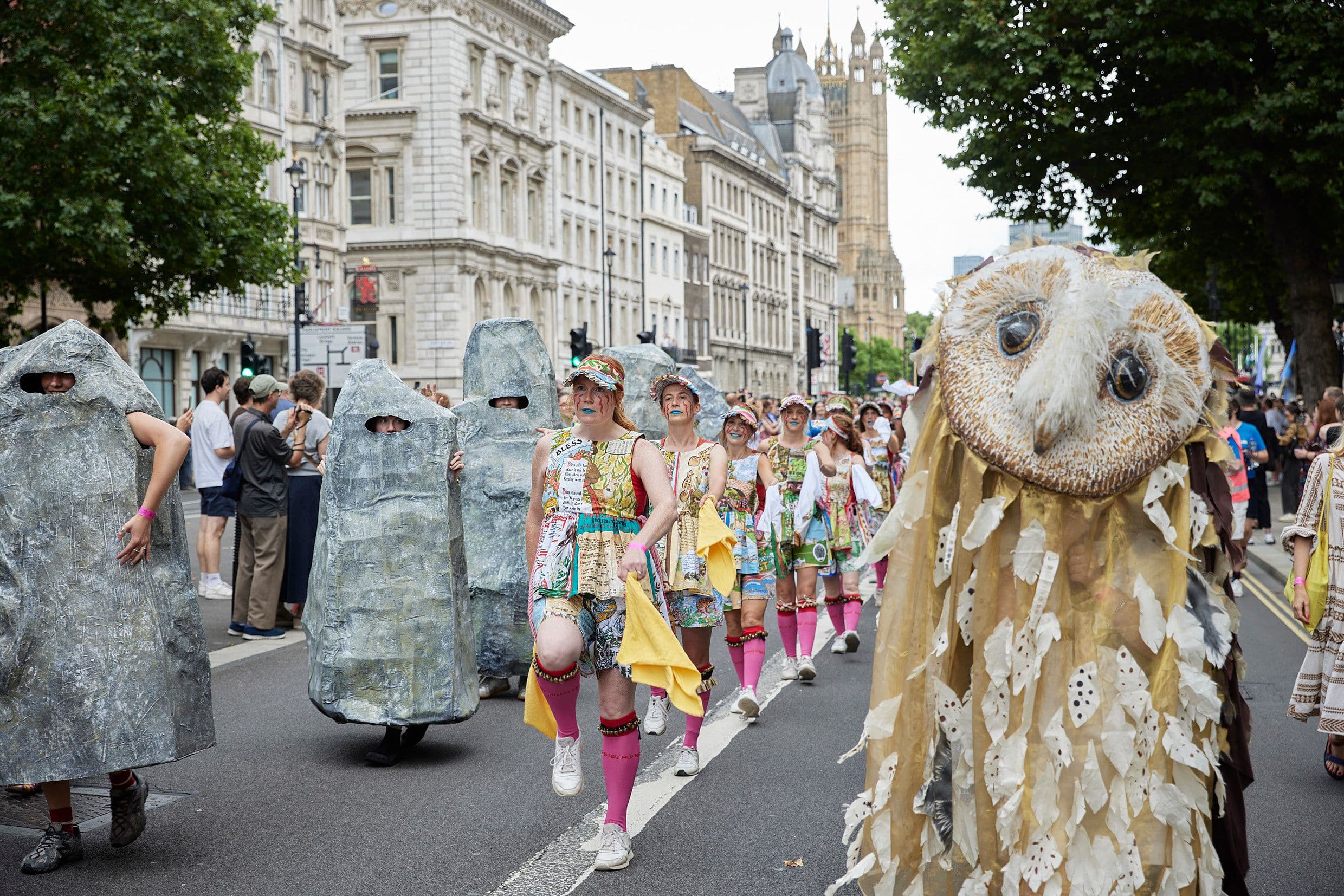
Jeremy Deller’s The Triumph of Art back in July has to be the highlight of the year (possibly even the decade!). It was the first time we’d made a performance at that scale with Boss properly at the centre. We created new custom costumes especially for the gig and commissioned Aron Attwood to build a full music set using his own Morris remix tracks, sampled sound and a special remix by Paul Hartnoll of Orbital.
It was also really exciting to collaborate with art students from DJCAD in Dundee, who made wearable cardboard standing stone costumes. We worked together on the choreography and brought it all together on the day. Dancing in the middle of Trafalgar Square felt delirious and so emotional. It was a real honour to be part of the day with so many amazing artists and it felt like a defining moment for us.
With the support of the Ffern Folk Foundation, you have just held the first installment of your educational series, Boss Folk Arts. How did it go, and what can we expect from Boss Folk Arts in 2026?
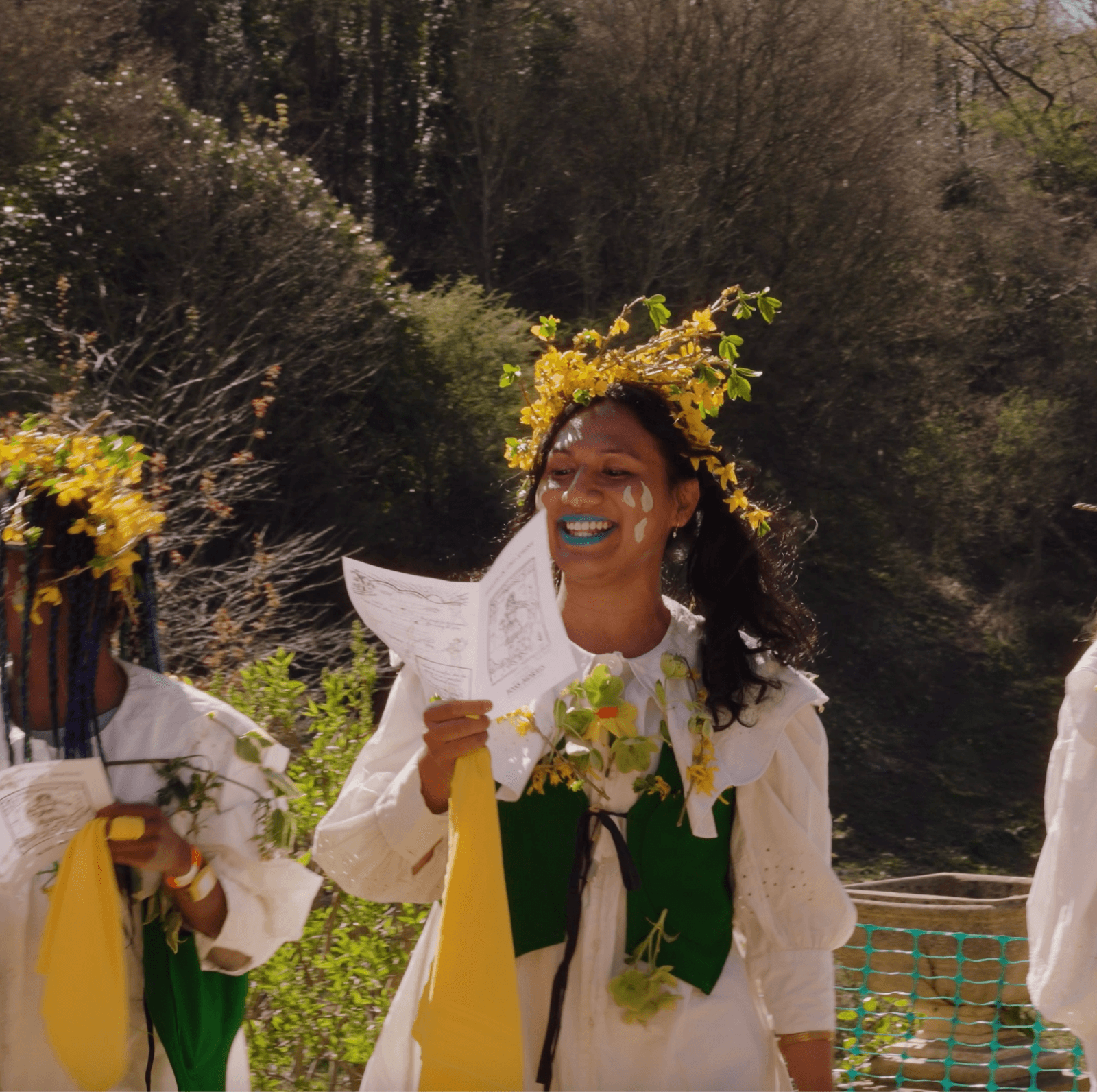
The response to the first Boss Folk Arts day was absolutely amazing. People were really up for it, from total beginners to dancers who already had a bit of Morris under their belts. There was a real willingness to give things a proper go, ask questions and spend time getting to know the dance details.
Boss Folk Arts is our teaching and outreach wing and in 2026 we‘re going to keep building on that. We’re planning more public workshops for beginners, as well as sessions for established sides who want space to develop their dancing and confidence. We also get a lot of messages from people thinking about starting new Morris sides, asking what it actually takes to get something off the ground. We’d love Boss Folk Arts to help with that, offering practical support, shared experience and lots of encouragement. We’re going to run more workshops in Stroud as well as further afield to help spread the joy of jingling around.
Finally, we are very excited about your plans to bring Morris into schools in 2026! What do you think Morris can offer young people today?
Kids seem to love Morris. The bells, the music and the jumping around. It’s joyful straight away and you don’t have to explain much before they’re totally into it. There’s also so much that feeds into it, the music, the craft, the costumes, the making, which means that there are lots of different ways to get involved.
Morris also gives young people a really open starting point. You’re moving together, listening to each other, getting a feel for rhythm and space but there’s no single “right” way it has to look. Once you’ve got hold of the basics, you can take it in all sorts of directions.
That’s the exciting bit for us. We’re really interested in what kids might do with Morris once it’s in their hands.
Interview by Daniel Farnham. Photography by Aloha Bonser-Shaw & Hollie Fernando.